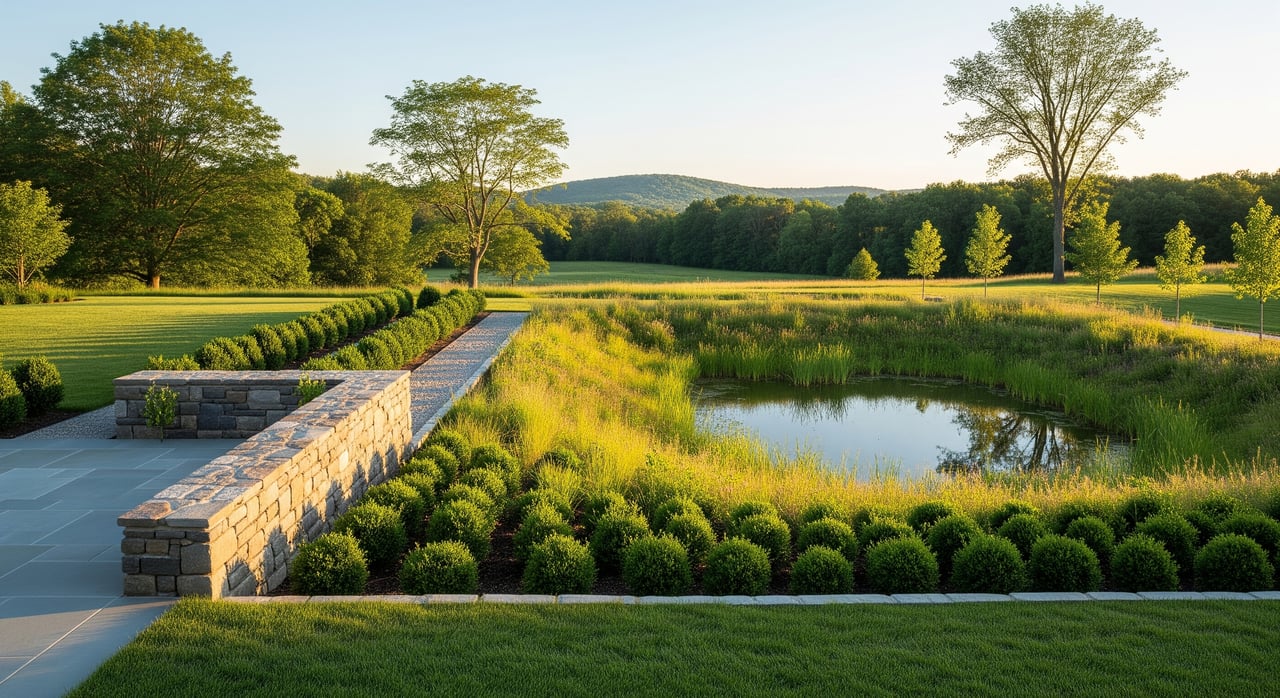
Planning a pool, deck, or fence in Katonah? If your property sits near a wetland or stream, one wrong move inside the buffer can mean stop-work orders, fines, and costly restoration. You want to protect your project timeline and your investment. In this guide, you’ll learn the local rules, the permits you may need, and simple steps to avoid expensive surprises. Let’s dive in.
What is a wetland buffer in Bedford?
The Town of Bedford treats the wetland or watercourse buffer as 100 feet, measured horizontally from the wetland boundary or stream bank. Town wetland maps are only a guide. The exact legal boundary is set by a field delineation from a qualified wetland professional. You will often need that delineation before the Town will review your plans. Bedford’s Wetlands law explains the definitions, permits, and enforcement process.
Who regulates your project?
Town of Bedford
The Wetlands Control Commission reviews most work inside the 100-foot buffer. Some low-impact projects may qualify for an administrative permit, while pools, additions, driveways, septic fields, grading, and similar work typically require a full permit with detailed plans. Start with the Town’s resources and speak with the Wetlands Permit Official early. The Town explains permits and meeting schedules on the Wetlands Control Commission page.
New York State DEC
New York State also regulates mapped freshwater wetlands and a 100-foot “adjacent area.” DEC offers parcel and project jurisdictional determinations and statewide permits. The program has been updated, with expanded protections phased in beginning in 2025. Learn more on the DEC Freshwater Wetlands Program page, and see how to request a DEC jurisdictional determination.
Possible federal review
The U.S. Army Corps of Engineers may have jurisdiction over certain waters and activities. Some projects need both state and federal approvals, even if the Town issues a permit.
Projects that often need permits
- New construction or additions within 100 feet of a wetland or stream.
- Pools, patios, retaining walls, driveways, and regrading.
- Septic systems, drainage, and infiltration systems in the buffer.
- Tree removal, vegetation clearing, and fill placement.
- Small projects can still require an administrative permit. Examples in Town code include decks up to 200 square feet located more than 50 feet from the wetland, small movable sheds up to 100 square feet more than 50 feet away, certain fences, and emergency repairs. Details are in Chapter 122 of the Town Code.
Common mistakes in Katonah
- Trusting map lines without a field delineation. Town and state maps are guidance only. A professional delineation often shifts the boundary. Building from a map alone risks a violation later. See the Town’s rules in Chapter 122.
- Doing “small” work without checking. Sheds, fences, terraces, and tree work inside the 100-foot area often need pre-approval. Some items have distance limits and conditions.
- Assuming a Town permit covers state rules. A local approval does not replace DEC or potential federal requirements. Review the DEC wetlands program before you start.
- Hiring unqualified help. Bedford requires delineations by qualified wetland professionals and plans certified by licensed New York design professionals. Incomplete or outdated reports can stall or derail your application. See Town standards in Chapter 122.
Penalties and how they impact closings
If work happens without the required permit, the Town can issue stop-work orders, fines, and restoration requirements. Violations can also delay building inspections. The Building Department can withhold a certificate of occupancy when wetlands approvals are missing or unresolved. Penalties are set in Bedford’s wetlands code, and state or federal agencies may impose separate actions if they have jurisdiction.
Timeline and costs to plan for
- DEC parcel jurisdictional determinations target a response within 90 calendar days. State permit rules also set review timelines after an application is deemed complete. See the DEC JD process.
- Town reviews vary by project complexity, and the Commission meets on a schedule. Expect weeks to months for full approvals.
- Typical cost drivers include wetland delineation and reporting, certified engineering plans, permit fees, and potential mitigation. Industry sources often place full delineations and reports in the low thousands of dollars, with simple reconnaissance assessments lower and complex sites higher. If compensatory mitigation is required, costs can rise significantly. For practical budgeting ranges, see this industry overview of delineation costs.
How to avoid costly mistakes
- Verify early. If your lot touches green wetland layers on Town or state maps, plan a professional wetland reconnaissance and request a DEC jurisdictional determination before you finalize designs or contracts.
- Call the Town first. Speak with the Wetlands Permit Official to confirm whether your idea needs an administrative or full permit. Start here: Bedford Wetlands Control Commission.
- Hire qualified pros. Use a wetland scientist or soil scientist for delineation, and a licensed engineer, architect, surveyor, or landscape architect to certify plans, erosion control, and any mitigation details. See permit standards in Chapter 122.
- Design to avoid the buffer. Regulators prioritize avoidance. Cluster improvements outside the 100-foot area, minimize impervious surfaces, and keep septic and infiltration systems out of the buffer when possible. Guidance is outlined in the DEC wetlands program.
- Prepare for mitigation if needed. If impacts are unavoidable, expect sequencing and possible compensatory mitigation, such as on-site restoration or credit purchases. Learn more in DEC’s overview of conservation and mitigation.
- Keep records. Save delineations, permits, plans, inspections, and final approvals. Clean files support future permits and smooth closings. The Town can withhold permits on properties with unresolved violations, per Chapter 122.
Buying or selling near wetlands?
If you are buying in Katonah, add wetland due diligence to your contract timeline. Order a delineation and request a DEC JD early, especially if you plan to add a pool or expand the home. If you are selling, gather old approvals, fix open violations, and be ready to show buyers that work in the buffer was permitted and finalized. Clean documentation reduces negotiation risk and helps keep the closing on track.
Ready for a clear plan? Reach out to The Price Team for local guidance on wetland buffers, pre-offer diligence, and project planning in Katonah and across Bedford.
FAQs
What is the wetland buffer width in Katonah?
- The Town of Bedford defines a 100-foot buffer from the wetland boundary or stream bank, and DEC also uses a 100-foot adjacent area for state-mapped wetlands. Field delineation sets the exact boundary. See Chapter 122.
Do small projects like fences or sheds need permits in Bedford?
- Often yes. Administrative permits can cover certain small projects if distance limits and conditions are met, such as small sheds or decks more than 50 feet from the wetland. Check details in Chapter 122 and confirm with the Town.
Does a Town permit satisfy DEC requirements?
- No. Municipal approvals do not replace state or federal permits. Review the DEC wetlands program and request a JD if needed.
How long does a DEC jurisdictional determination take?
- DEC targets a 90-day response for parcel JDs, with separate timelines for permit reviews after an application is complete. See the DEC JD process.
What if a prior owner did unpermitted work near a wetland?
- The Town can require restoration, issue fines, and withhold permits until violations are resolved. Keep records and contact the Wetlands Permit Official. Penalties are outlined in Chapter 122.