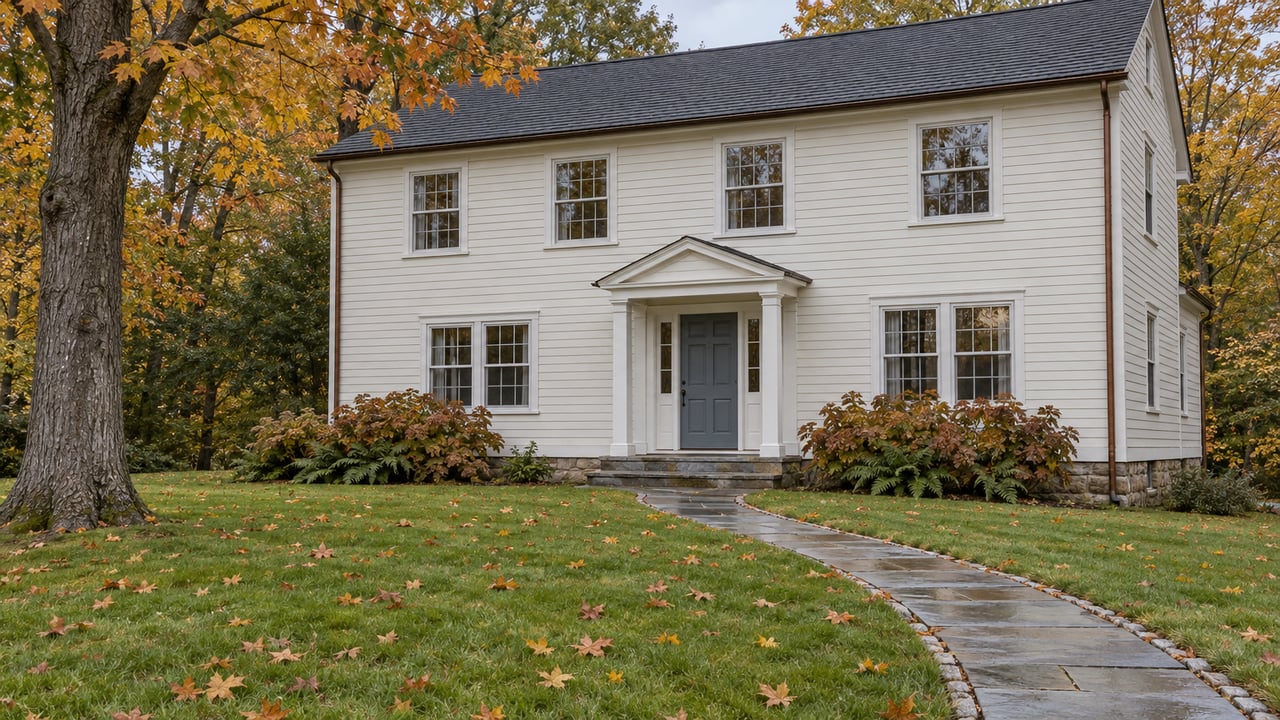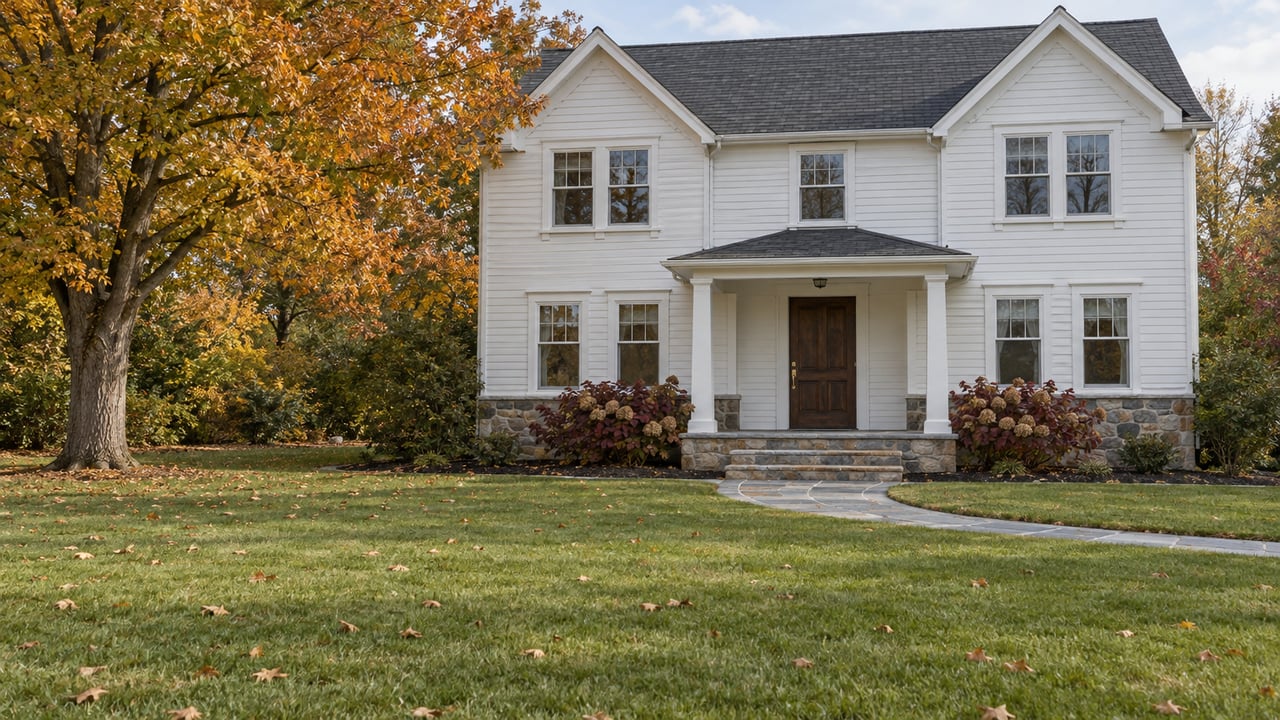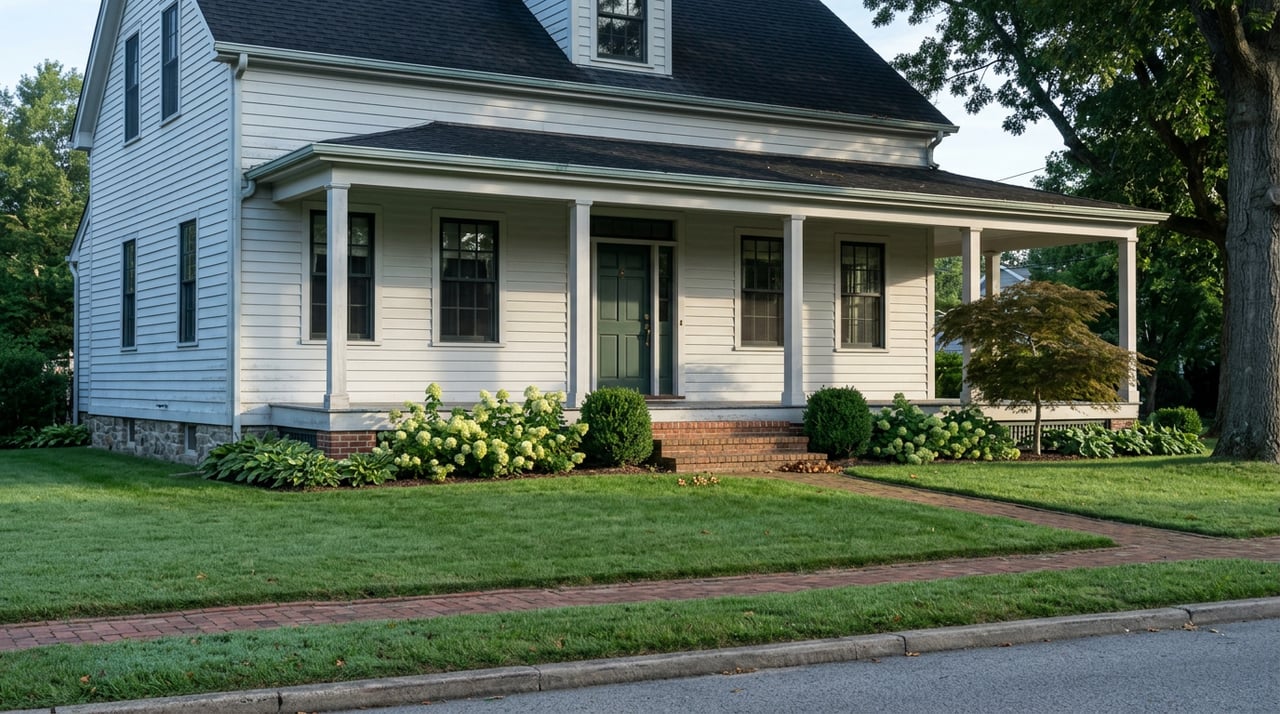
Walk south from the corner of Bedford Road and The Parkway on a summer evening and you're inside the historic district before you've noticed a boundary. Wide porches, wavy old glass, a churchyard, a green median planted a century ago. Keep walking two or three blocks past Edgemont Road and the houses get newer, the lots get bigger, and nothing about the architecture asks permission from anyone. Same zip code. Same school system. Same Metro-North line into the city. Very different housing product, and very different rules for what you're allowed to do with it once you own it.
That split is the thing the median price doesn't tell you, and it's worth understanding before you fall in love with a listing.
The number everyone quotes barely means anything this month
Katonah does not sell many houses in a given month, and that fact matters more than any single price point. In May 2026, Redfin recorded exactly one home sale in Katonah, down from two the year before. When your entire monthly sample is one or two closings, the "median" isn't really describing a market trend. It's describing whichever specific houses happened to sell.
That's part of why the portals disagree with each other so sharply right now. Redfin's three-month window put Katonah's median sale price at $1.1 million, down 4.2 percent year over year. Movoto's August 2026 snapshot of active listings showed a median asking price of $1.29 million, with price per square foot down 7 percent from a year earlier. Zillow's home value index, which smooths across the entire housing stock rather than just recent sales, put the typical Katonah home at $922,888, up a modest 1.8 percent year over year. A separate market report pegged the median closer to $1.15 million with prices up nearly 4 percent, describing Katonah as a balanced market with roughly two months of supply.
None of these numbers are wrong. They're measuring different things. Sale prices, list prices, and a rolling value index will never match perfectly, and in a market this thin, one large historic cottage or one newer four-bedroom colonial closing in a given month can swing the median by six figures. If you're comparing Katonah to a neighboring town using a single headline number from a single site, you're comparing apples to whatever happened to sell that quarter.
The line nobody sees on a map
Here's the part of Katonah's story that explains why the housing stock splits the way it does. The village didn't grow where it sits today by accident. In 1897, New York City's need for reservoir capacity forced the original hamlet, then called Whitlock Station, to relocate a mile south. Guided by the Katonah Village Improvement Society, many of the existing houses were moved whole or in pieces by horse and wagon to their new sites, and the resettled village was renamed Katonah, after the leader who had sold the land to the original settlers. The Olmsted Brothers landscape architecture firm designed much of the new layout, including the Katonah Greens that still anchor the district.
Most of what got built or relocated during that 1885 to 1910 window forms a tight, walkable cluster bordering the Greens. In 1983, that cluster, roughly three dozen structures, was added to both the New York State and National Registers of Historic Places as the Katonah Historic District. Everything outside that boundary, even a block away, is just Katonah. Same commute, same downtown, no historic designation attached to the deed.
Here's what that split looks like in practice.
| Inside the historic district | Outside the historic district | |
|---|---|---|
| Typical construction era | Built or moved 1885 to 1910 | Wide range, including newer construction |
| Lot character | Smaller in-village lots near the Greens | Larger lots, more acreage available |
| Exterior changes | Reviewed by the Katonah Historic District Advisory Commission | |
| Walkability | Walk to downtown and the train station | Often a short drive to the same amenities |
| What's nearby | The Katonah Greens, three churches, the original 1897 town plan | Newer subdivisions and standalone homes |
What that boundary actually costs you
If a listing sits inside the historic district, you're not just buying a house. You're buying into a review process. The Katonah Historic District Advisory Commission, a five-member body that includes the town historian and two district residents, holds a public hearing on any application for a major change to a building's exterior appearance. Roofs and paint colors are specifically exempted from that review, but siding, windows, additions, and other visible changes generally are not.
For a buyer planning to renovate right after closing, that's a real timeline consideration, not a formality. It's the kind of detail that surfaces during due diligence rather than on the listing sheet, and it's worth asking about before you're deep into an inspection period. A newer build three streets away carries none of that friction. It also, typically, carries a bigger lot and a higher price tag, which is part of why the top of Katonah's range and the bottom of it can look like they belong to two different towns.
The commute pulls buyers across a state line
Katonah's buyer pool isn't only a Westchester story, and that's a second piece of the pricing puzzle. Katonah station sits on Metro-North's Harlem Line, roughly an hour's ride to Grand Central Terminal. That alone would make it a solid commuter town. What's less obvious is that Housatonic Area Regional Transit runs a peak-hour shuttle connecting Ridgefield, Connecticut directly to Katonah station, because the Harlem Line beats the New Haven Line's Danbury Branch for a fast, direct trip into the city.
That means some of the demand pressure on Katonah housing is coming from commuters who live across the state line and never show up in a New York-only market analysis. If you're comparing Katonah to a similarly priced Connecticut town on price per square foot alone, you're missing the fact that Katonah is drawing from a wider commuter radius than its own borders suggest.
What to check before you write an offer
- Ask whether the specific address falls inside the historic district boundary, not just whether it's in "Katonah." The Greens-adjacent cluster and the surrounding streets are not interchangeable for renovation purposes.
- If exterior work is part of your plan, ask what the Historic District Advisory Commission's typical hearing timeline looks like before you write a contingency around it.
- Compare closed sales over a rolling several-month window rather than any single month's median. With Katonah closing as few as one or two homes some months, a single outlier sale can move the number more than it would in a higher-volume market.
- If you're relocating from Connecticut, price the Ridgefield shuttle and Harlem Line commute into your comparison rather than assuming Katonah is priced purely for a New York buyer pool.
FAQ
Does the historic district review apply to interior renovations? The commission's review authority is over exterior appearance and building applications that change how a structure looks from the outside. Interior work isn't the trigger.
Do I need approval to repaint or reroof a historic district home? No. Roofs and paint colors are specifically excluded from the commission's review requirement.
Can I actually commute from Ridgefield, Connecticut through Katonah? Yes. A peak-hour shuttle connects Ridgefield to Katonah station specifically because the Harlem Line offers a faster direct ride to Grand Central than the Danbury Branch does.
Why do different real estate sites show such different Katonah median prices right now? Because they're measuring different things; some track closed sales, some track current asking prices, and some use a rolling value index across the whole housing stock. In a market with only a handful of monthly closings, those methods can diverge by well over $100,000.
If you're weighing a historic Katonah cottage against a newer build a few blocks out, or trying to figure out what a Ridgefield commute actually buys you on either side of the state line, The Price Team at Changing House to Homes can walk the district boundary with you and pull the closed sales that actually match what you're comparing. Get Access To Our Listings.
This article is general information, not legal, tax or financial advice. Consult a qualified professional about your situation.