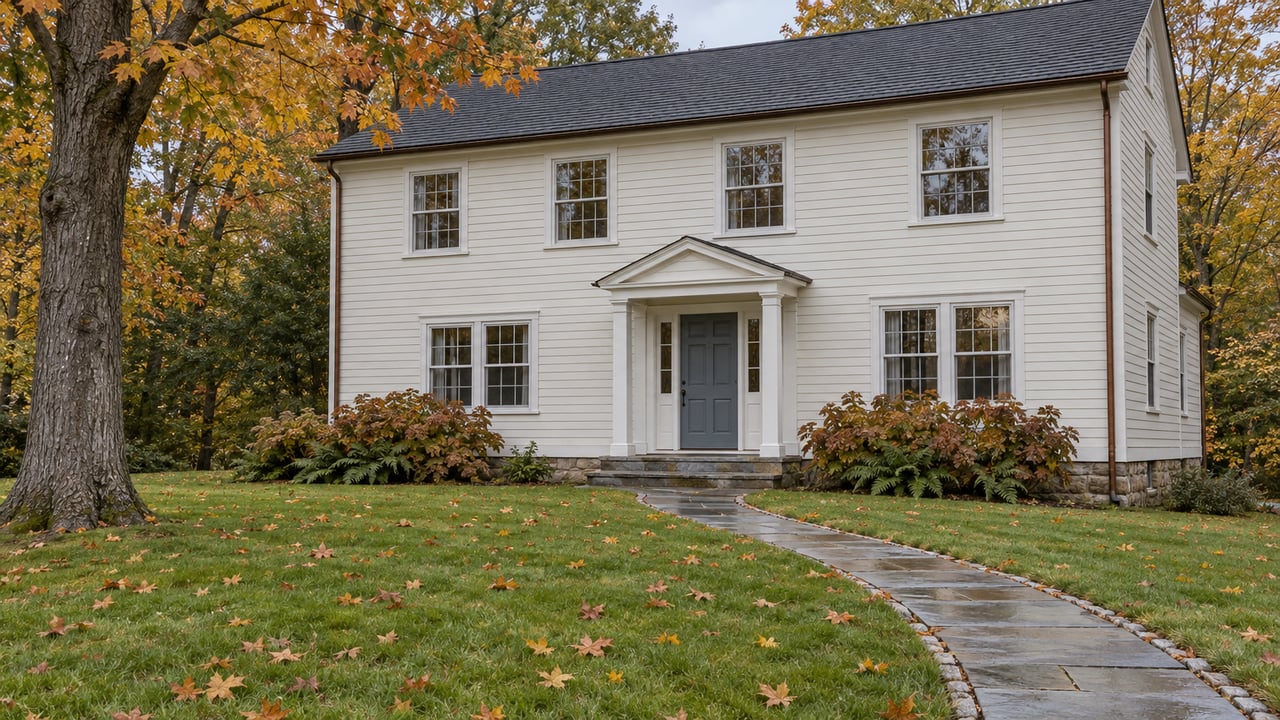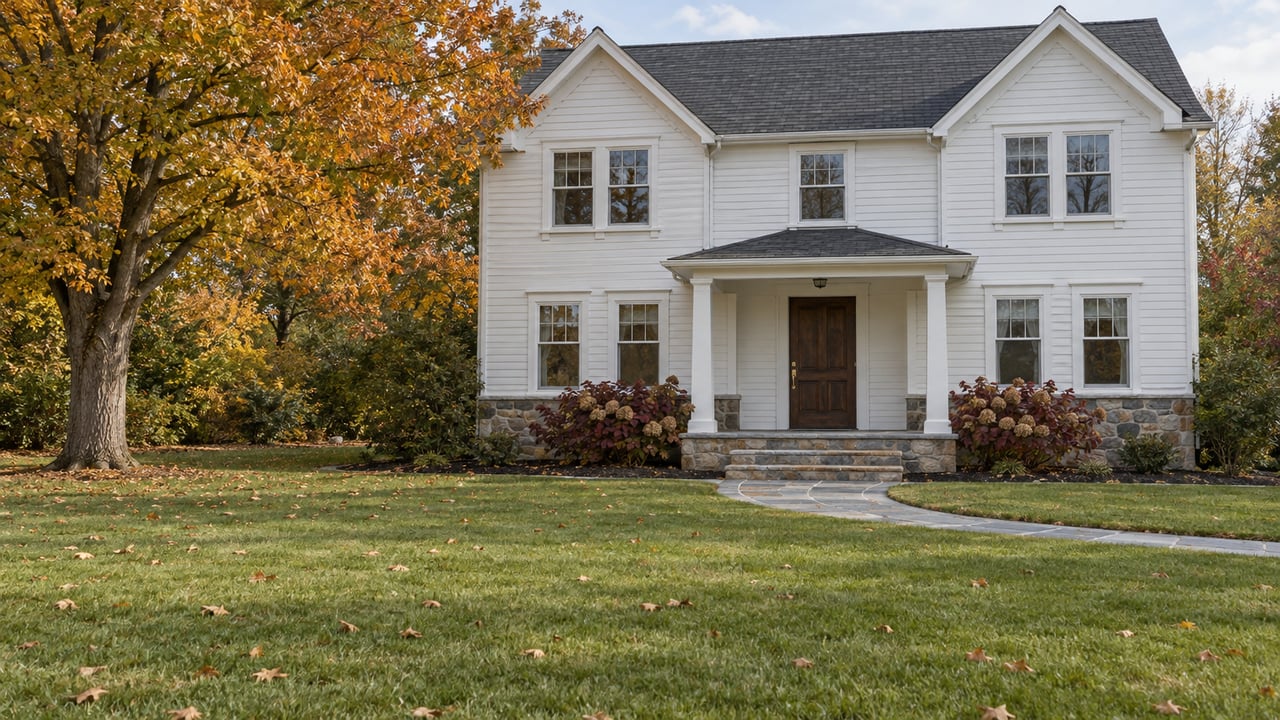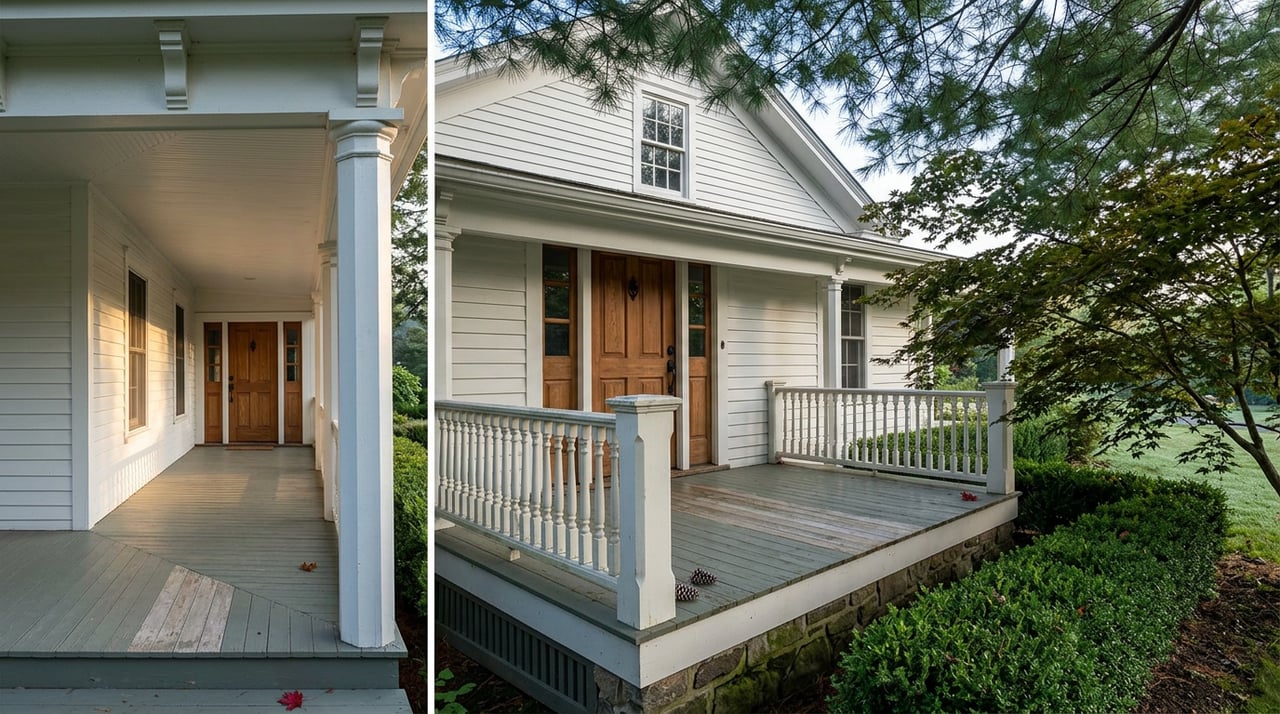
You close on a house on one of the streets inside Katonah's historic district. The porch sags a little on the left side, the kind of thing you tell yourself you will fix within the year. Come spring, you call a contractor, get a quote, and start looking into a town permit the way you would anywhere else in Westchester.
That is where the plan stalls. Not because the work is forbidden. Because there is a step in front of the permit that most buyers never hear about until they are standing at the counter being told to come back.
What the historic district actually covers
Katonah's historic district exists because of how the hamlet got here in the first place. In the late 1890s, the entire village was picked up and moved several miles to make way for the expansion of New York City's water supply. The relocation was organized by the Katonah Village Improvement Society, and much of the landscaping that shaped the result, including the Katonah Greens, came from the landscape architecture firm of G.S. and B.S. Olmstead. Most of the buildings you see today were either built or moved into place between 1885 and 1910. The area was added to the New York State and National Registers of Historic Places in 1983.
What actually happens once you are inside that boundary is a narrower, more specific set of rules than most buyers assume.
The town body responsible is the Katonah Historic District Advisory Commission, a panel that operates under the Town of Bedford. Its job is not to approve everything about your house. The Katonah Historic District Advisory Commission reviews major changes to exterior appearance. That phrase does a lot of work, and it is worth sitting with before you assume the worst about what you can and cannot touch.
The two things people assume are restricted, and aren't
Ask most new owners in the district what they think requires approval, and paint and roofing usually top the list. Neither does. Roofs and paint colors are explicitly excluded from Commission review. You can reroof, repaint, and repair either without a Certificate of Historical Review from the Commission at all.
That single exemption changes the calculus for a lot of ordinary maintenance. A homeowner planning a repaint before listing, or a roof replacement after a hailstorm, is not looking at a historic district delay. That project moves at the same pace it would anywhere else in Bedford.
What actually requires the certificate, and when
The friction shows up somewhere else, and it shows up in sequence, not in scope. Before any other town permit is issued, the Town of Bedford code requires an applicant to obtain a Certificate of Historical Review for a defined list of changes. Based on the town's own code, that list includes:
- New construction of a principal or accessory structure
- An enclosed addition to an existing structure
- Adding or removing a deck or porch
- Demolition of a principal or accessory structure, in whole or in part
Notice what is on that list. A porch rebuild is not a maintenance item in this district. It is squarely inside Commission review, right alongside additions and new construction. That is the detail that catches people off guard, because a porch repair feels like upkeep, not a change to the historic fabric of the hamlet. The Commission does not see it that way.
The application itself is not exotic. It asks for sketches, drawings, or photographs, not necessarily professional ones, detailed enough to show the architectural design of the structure and the site both before and after the proposed work. What matters more than the paperwork is the order of operations. The certificate has to come first. The town's other permits and approvals do not get issued until it is in hand.
| Change | Commission review required first? |
|---|---|
| Repainting the exterior | No |
| Replacing the roof | No |
| Adding or removing a deck or porch | Yes |
| Building an addition | Yes |
| New construction on the lot | Yes |
| Demolishing part or all of a structure | Yes |
Who is actually reviewing your application
The Commission is a five-person body made up of Bedford residents, with specific seats built into the structure: one member must be an architect, one must be the Town Historian or a designated representative, and two must be residents of the district itself. It meets monthly on an as-needed basis, with agendas posted on the town's meeting calendar rather than a fixed date every month.
That last part matters more than it sounds like it should. If you assume you can time a renovation the way you would with a standard building permit, applying whenever the contractor's schedule opens up, you can lose weeks waiting for the next posted meeting. Buyers who plan around a fixed monthly date, the way you might with a typical zoning board, sometimes find the actual calendar less predictable than that.
Why this matters more at the offer stage than at the closing table
The mechanism here is not that the historic district freezes your house in place. It is that the district reroutes certain kinds of work through an extra front-end step, while leaving a surprising amount of ordinary maintenance untouched. For a buyer comparing a house inside the boundary to a similar one outside it, the real question is not "how restricted is this property" but "what am I actually planning to do to it, and does that plan happen to fall on the Commission's list."
A buyer who wants to repaint, reroof, and otherwise leave the footprint alone is not taking on meaningful friction by choosing a house inside the district. A buyer who is counting on adding a primary suite over the garage, enclosing a side porch, or tearing down an outbuilding needs to build the certificate process into the timeline before writing an offer, not after.
That is worth raising with your agent and with a local attorney before you go under contract, particularly if your renovation plans are part of why you are buying the house at all. The Town of Bedford's own historic district page is the primary source for the current commission members and any recent code updates, and it is worth a direct look before you assume anything about a specific property.
FAQ
Does buying in the Katonah Historic District mean I need approval to repaint my house? No. Roofs and paint colors are excluded from Commission review entirely.
What if I just want to rebuild an existing porch, not add a new one? The addition or removal of a deck or porch is on the list of changes that require a Certificate of Historical Review before any other town permit is issued, regardless of whether it is new construction or a rebuild of something already there.
Who decides on my application? A five-member panel of Bedford residents that includes an architect, the Town Historian or a designee, and two residents of the historic district itself.
How often does the Commission meet? Monthly, on an as-needed basis, with meeting dates posted to the town's calendar rather than fixed in advance.
If you are weighing a house inside Katonah's historic district against one just outside it, the renovation plan you already have in mind is the detail that should drive the decision, not the boundary line itself. Dvora Price and the Price Team walk buyers through exactly this kind of local detail before an offer goes in, not after. Get access to our listings to start with a house that fits what you actually want to do with it.
This article is general information, not legal, tax or financial advice. Consult a qualified professional about your situation.